Key Takeaways
IPTV is a delivery method, not a legal verdict. In the US, the central question is whether the service has permission to distribute the channels, films, sports, and other programming it offers.
- IPTV technology can be used by both legitimate and unauthorized services.
- A real company, clear terms, and transparent licensing claims are useful signs of a reputable provider.
- Unusually cheap access to premium channels may indicate copyright violations.
- Unauthorized services can expose viewers to malware, privacy problems, shutdowns, and lost payments.
- Official apps, documented subscriptions, and responsive support make safer streaming choices easier.
What IPTV means and how it works
IPTV, or internet protocol television, delivers television programming through an internet connection rather than through a traditional cable or satellite signal. Depending on the service, that programming may include live channels, on-demand movies, recorded programs, or other video. The technology is now used across smart TVs, streaming boxes, computers, tablets, and phones.
The phrase “iptv legal” therefore describes a question about rights and business practices, not the underlying internet protocol. A service can use perfectly ordinary streaming technology and still distribute content without permission.
The technology behind internet protocol television
At a basic level, a provider obtains or produces programming, encodes it into digital video, and sends it through internet-connected servers. An app or compatible player then receives the stream and presents it on a viewer’s device. Live programming is delivered as it happens, while on-demand content is stored for playback when the customer chooses.
Modern systems may also support features such as pausing live television, restarting a program, or browsing an electronic program guide. The exact experience depends on the provider, the device, the internet connection, and the rights attached to each piece of content. A broader IPTV technology guide explains the delivery process in more detail.
How IPTV differs from cable, satellite, and streaming apps
Cable and satellite services use dedicated physical networks or satellite transmissions to deliver television. IPTV uses an internet connection, which can make it available on a wider range of connected devices and can support more flexible viewing arrangements. It still requires bandwidth, however, and a weak or crowded connection may lead to buffering.
Streaming apps often focus on on-demand libraries, while IPTV commonly refers to live television delivered over the internet. The categories can overlap: one legitimate service may provide live channels, a replay library, and on-demand programs in the same app. The delivery method alone does not establish whether the service is authorized.
Why IPTV itself is not automatically illegal
There is nothing inherently unlawful about sending television over the internet. Broadcasters, cable companies, telecom providers, and subscription platforms all use internet delivery for legitimate programming. The legal issue arises when a service obtains, packages, or retransmits protected content without the necessary permission.
That distinction matters because a polished interface or a familiar streaming device does not prove authorization either. Viewers need to look at the provider behind the service and the rights supporting its catalog, rather than judging only by how the stream works.
The role of content licensing and distribution rights
Licensing determines whether a provider may show a particular channel, event, movie, or series in a particular territory. Rights can vary by country, time period, device, and type of use, so a provider may be authorized for some programming but not everything it advertises.
A lawful service should be able to explain its business identity and subscription terms without hiding behind vague promises. As a practical starting point, readers can compare the warning signs described in this IPTV legality guide, while remembering that a website summary is not a substitute for checking the provider itself.
When IPTV services are legal
Legal IPTV services operate within a permission structure: they either own the programming, license it, or distribute it through an arrangement with the relevant rights holder. That structure can support paid subscriptions, free viewing, advertising, or a combination of the three. A higher price does not automatically prove legality, just as a free service is not automatically suspicious.
The useful question is whether the service can explain what it offers and why it is entitled to offer it. This is where a provider’s public information, app distribution, payment process, and customer support become more than cosmetic details.
Licensed live TV providers and network services
A licensed live TV provider pays for or otherwise secures the rights needed to carry its advertised channels and programs. It may offer a package of live networks, regional programming, news, entertainment, or sports under agreements that define where and how the content can be viewed.
Availability can change by location because broadcast and distribution rights are often regional. A legitimate provider normally explains those restrictions in its service information instead of promising every channel to every customer everywhere.
Legitimate free and ad-supported IPTV platforms
Some internet television platforms are free because advertising, public distribution, or another lawful funding model supports the programming. They may offer live channels, older shows, news, or other content without a monthly subscription. Free access is not the problem; undisclosed or unauthorized access is.
Readers should still use the official website or app, check the platform’s terms, and avoid downloads that ask for unnecessary permissions. A guide to free legal IPTV options can help clarify the difference between a verified free platform and an unknown playlist or app.
Internet TV offered by cable and telecom companies
Cable and telecommunications companies may deliver television through an internet connection as part of a home service or a separate subscription. In that arrangement, the company’s existing distribution relationships and customer account typically support the programming it provides.
The label used in marketing is less important than the underlying authorization. Internet TV from an established operator can be IPTV in technical terms, even when the company presents it as a television package rather than an IPTV product.
How official app stores and subscriptions fit into the picture
An app in an official store is not conclusive proof that every stream inside it is authorized, but official distribution is one useful part of a broader check. A normal subscription flow should identify the provider, explain recurring charges, describe refunds, and provide a way to contact support.
IPTVON.ME describes its offering as IPTV subscription services with live channels and video-on-demand content, along with customer support. Those are service descriptions, not a substitute for a viewer’s own review of licensing and terms, but they show why the provider identity and the rights behind the catalog should be considered together.
When IPTV crosses into illegal streaming
IPTV crosses the line when a provider or intermediary supplies protected programming without the permission required for that distribution. This can involve live channels, pay television, movies, sports events, or video-on-demand libraries. The fact that a viewer pays a fee does not cure the underlying rights problem.
Unauthorized sellers often borrow the language of legitimate services. They may advertise a large channel count, multiple devices, or high-resolution playback while offering little information about the company or its licensing. A guide to IPTV legality provides another useful lens for separating technical claims from authorization claims.
Services that distribute copyrighted channels without permission
A service is suspect when it appears to rebroadcast subscription channels or premium events without identifying a licensing arrangement. This is especially true when it promises content from many markets, networks, and sports packages in one inexpensive bundle. The concern is not the number of channels alone, but whether the provider has the right to distribute them.
Viewers should not assume that a stream is lawful because it plays successfully. Unauthorized streams can look professional until a rights holder reports them, a server disappears, or the seller changes its address.
The difference between a provider and an unauthorized reseller
A provider manages a lawful distribution service under rights it can explain. An unauthorized reseller may simply collect payments for access to someone else’s unlicensed streams, sometimes changing server details or app instructions when access is blocked. The reseller may have no durable relationship with the networks it advertises.
That distinction can be difficult to verify from a sales message alone. Look for a stable business identity, meaningful terms, and support that can answer questions about content availability without avoiding the subject.
Why extremely low prices can signal copyright violations
Price is not a legal test, but an implausibly cheap bundle deserves scrutiny. Premium programming carries licensing, infrastructure, staffing, and support costs, so a promise of nearly every paid channel for a few dollars may not reflect a sustainable authorized business model.
The same warning applies when a seller pressures customers to pay quickly, offers only private messaging support, or refuses to explain what is included. A low introductory price can be legitimate; a price that appears disconnected from the content being promised is a reason to pause.
Common signs of pirated movies, sports, and premium channels
Several clues become more concerning when they appear together. They include a catalog that seems far broader than the provider’s public identity would support, access to premium events without territorial limits, and instructions to install an app from an unofficial source.
Other red flags include payment through unusual channels, missing refund terms, and repeated replacement links. These signals do not prove a violation individually, but they make the service harder to trust and worth avoiding until its authorization is clear.
How to check whether an IPTV service is legal
No single clue can settle the question for every service. A careful review combines the company’s identity, its licensing explanation, its customer terms, and the way its apps are distributed. Take a few minutes before paying, especially when a service promises a huge catalog at an unusually low price.
The goal is not to investigate private contracts that customers cannot access. It is to see whether the business behaves like a real, accountable distributor and whether its public claims are consistent with the programming it sells.
Verifying the company’s identity and business information
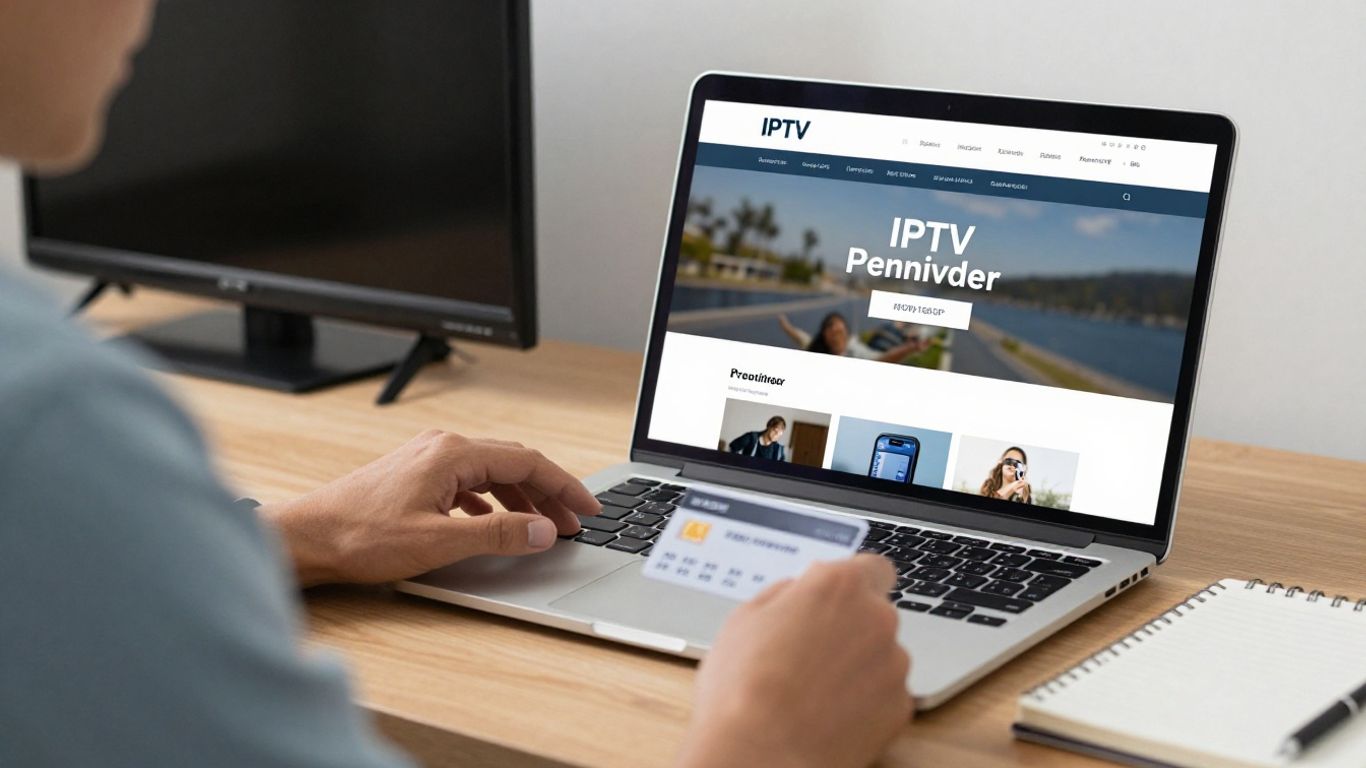
Start with the provider’s legal or trading name, physical business information, contact channels, and customer service process. A clear website should explain who operates the service and how customers can raise billing or technical concerns. Anonymous sellers and rapidly changing domains make accountability much harder.
Compare the information across the website, checkout page, confirmation email, and app. Major differences in names or payment recipients should be treated cautiously rather than dismissed as a minor branding detail.
Reviewing licensing claims and content partnerships
Read what the provider says about its programming rights, territories, and restrictions. A general statement that content is “fully licensed” is less helpful than a clear explanation of the networks or categories included and the markets where they are available.
If the catalog promises every premium channel and event worldwide, ask how those rights work. Legitimate providers may have regional gaps or blackout rules; those limitations can actually be more credible than an unlimited promise.
Checking payment methods, terms, and customer support
The checkout process should identify the seller, state the price and billing frequency, and explain cancellations or refunds. Customer support should be reachable through a consistent channel and should answer ordinary questions about compatibility, availability, and account management.
A compact review of these practical details can keep a purchase from becoming a gamble:
- Confirm the seller’s name before entering payment information.
- Read renewal, cancellation, and refund terms.
- Check whether support has a real response channel.
- Save receipts, order details, and service communications.
These steps do not prove that a provider owns every right, but they reduce exposure to anonymous sellers and make problems easier to resolve. They also help distinguish a genuine subscription from a temporary access code with no accountable business behind it.
Assessing the service’s apps, website, and download sources
Use the provider’s official website and the device manufacturer’s supported app marketplace whenever possible. Be wary of instructions that require disabling security settings, installing unknown files, or entering account credentials into a copied login page.
An app’s appearance is not evidence of licensing, and an official store listing is not a complete legal review. Still, transparent downloads, ordinary permissions, consistent branding, and documented support are safer signs than a file sent through an anonymous message.
Legal and security risks of unauthorized IPTV
Unauthorized IPTV creates two kinds of exposure at once. The first involves copyright and the possibility that access to protected content was obtained or distributed without permission. The second involves ordinary consumer risks, including malicious software, deceptive billing, and the collection of personal information.
The service may work for a while, which can make the risk easy to overlook. But reliability, privacy, and legal status can change quickly when the underlying operation is hidden or unstable.
Copyright enforcement and potential penalties
Copyright enforcement can target the businesses distributing unauthorized streams, and the legal consequences depend on the conduct, the parties involved, and applicable law. Viewers should not treat online anonymity, a foreign server, or a VPN as a guarantee that there is no risk.
The safest approach is to use services that can account for their programming rights. For a US-focused overview of the issue, this US IPTV legal guide discusses authorization, the DMCA, and risks associated with unauthorized providers.
Malware, phishing, and unsafe streaming applications
Unknown streaming apps and modified devices can expose users to malware, spyware, or phishing pages. A file that promises instant access may request broad permissions, redirect a browser, or capture login and payment details. These problems can affect the phone, computer, or home network on which the app is installed.
Keep device software updated, avoid sideloading files from unverified sources, and do not reuse an important password in an unfamiliar service. Security software helps, but it cannot turn an untrusted download into a safe one.
Privacy concerns involving payments and personal data
An unverified seller may collect names, email addresses, card details, device identifiers, or viewing information without clearly explaining how that data is handled. The risk increases when payment is routed through personal accounts or when a checkout page lacks a recognizable business identity.
Before subscribing, read the privacy notice and consider what information the service truly needs. A general privacy policy guide is useful for understanding the kinds of collection and sharing disclosures a legitimate online service should make.
Service shutdowns, buffering, and lost subscription money
Unlicensed streams can vanish when servers are blocked, operators are investigated, or upstream sources change. Customers may face buffering during popular events, broken playlists, replacement apps, and support that stops responding. Refunds are often difficult when the seller has no stable business presence.
That uncertainty is a cost even when the initial subscription is inexpensive. A dependable service should make its terms and support process visible before payment, rather than asking customers to accept that interruptions are simply part of the deal.
How to choose and use IPTV safely
A safe choice begins with realistic expectations. Compare what you actually watch, where you live, which devices you use, and how much support matters to you. Do not let a massive channel count outweigh unclear rights, hidden billing, or unsafe installation instructions.
IPTVON.ME presents a premium IPTV experience centered on live channels, video-on-demand content, high-quality streaming, and customer support. Those documented service features may be relevant to someone comparing subscriptions, but every customer should still read current terms and confirm that the available content fits their location.
Comparing reputable providers by content and availability
Compare providers by the channels and on-demand categories they explicitly offer, not by an impressive but unexplained total. Check regional availability, simultaneous-device rules, picture quality, recording or replay features, and the internet connection the service recommends.
A sensible comparison also includes support and cancellation terms. Reliable streaming is about more than a first successful playback; it includes what happens when an app needs an update, a channel changes, or billing needs attention.
Using official apps on supported devices
Install the provider’s app through its official website or a trusted app store, and confirm that your television, streaming device, phone, or computer is supported. Keep the operating system and app current, and use a strong, unique password for the account.
If setup instructions ask you to disable security protections or download an unexplained file, stop and verify the request. Convenience is not worth giving an unknown program access to your device or home network.
Understanding why a VPN does not make piracy legal
A VPN can encrypt traffic between a device and a VPN server and may improve privacy on some networks. It does not grant a provider the right to distribute copyrighted programming, and it does not change the terms under which a channel or event may be viewed.
In other words, privacy technology and copyright permission address different questions. Use a VPN only for lawful purposes and do not treat it as a legal shield for an unauthorized subscription.
What to do if a service’s legality is unclear
Do not pay until the provider’s identity, terms, app source, and licensing explanation are clear enough for you to make a comfortable decision. Search for consistent business information, ask specific questions, and compare the answers with the service’s advertising.
If you already installed a questionable app, remove it, change passwords used on the device, review payment activity, and run a trusted security check. When the warning signs remain unresolved, choosing a transparent licensed service is the safer option.
Conclusion
IPTV can be a lawful and convenient way to watch television in the US, but legality depends on content rights and the provider’s conduct. Check who operates the service, how it explains its programming, where its apps come from, and what support and payment terms it offers. Those simple checks can help you avoid unauthorized streams and choose internet television with greater confidence.
Frequently Asked Questions
Is IPTV legal in the US?
IPTV technology is legal, but a particular service may be unlawful if it distributes copyrighted programming without the required permission. The provider’s rights and business practices determine the answer.
Are all IPTV subscriptions illegal?
No. Licensed paid services, network platforms, telecom offerings, and legitimate ad-supported services can all deliver television over the internet lawfully.
Is free IPTV automatically illegal?
No. Some free services are supported by advertising or lawful public distribution. Verify the source, terms, app, and programming rather than judging legality by price alone.
Can I tell if a provider is unauthorized from its price?
An unusually low price for a very large premium catalog is a warning sign, not conclusive proof. Combine price concerns with checks of the company, licensing claims, payment process, and support.
Does using a VPN make IPTV legal?
No. A VPN may provide privacy or encryption in some situations, but it does not give a provider permission to distribute copyrighted content.
What are the main safety risks of unverified IPTV apps?
They may expose users to malware, phishing, spyware, unsafe permissions, deceptive payment pages, or unnecessary collection of personal data. Unknown downloads should be treated cautiously.
What should I do if an IPTV service suddenly shuts down?
Stop using its app, review your account and payment activity, save receipts and communications, and contact the payment provider if appropriate. For future subscriptions, favor services with clear business information and refund terms.