Estimated reading time: 15 minutes
Key Takeaways
- Understanding IPTV: IPTV allows you to stream live TV and on-demand content using your internet connection.
- Flexible Subscriptions: IPTV subscription models vary widely in pricing and offerings, making it essential to choose wisely.
- Legal Considerations: Always ensure your IPTV service is compliant with licensing regulations.
- Device Compatibility: IPTV can be accessed on a variety of devices, enhancing accessibility and convenience.
- Proactive Management: Regular checks and updates on your service can prevent technical issues and improve your viewing experience.
Table of Contents
- What Is IPTV and Why Should You Care?
- What Is IPTV? The Basics Explained
- How IPTV Works: The Technical Foundation
- Understanding IPTV Subscription Models
- The Reality of Premium IPTV Services
- IPTV Benefits: Why People Make the Switch
- IPTV Drawbacks and Potential Risks
- IPTV Device Compatibility and Setup Process
- How to Choose the Best IPTV Service for Your Needs
- Evaluating Premium IPTV Providers Safely
- Quick Setup Guide for New IPTV Users
- Frequently Asked Questions
What Is IPTV and Why Should You Care?
IPTV, or Internet Protocol Television, is revolutionizing the TV viewing experience by delivering channels and shows over the internet instead of through traditional cable or satellite methods. Forget waiting for installations or the hassle of satellite dishes; with IPTV, all you need is a reliable broadband connection.
In this guide, we will explore the technical foundations, subscription models, and the best IPTV services available. We will also discuss the benefits, risks, and practical advice necessary for safely navigating the IPTV landscape.
What Is IPTV? The Basics Explained
IPTV (Internet Protocol Television) delivers television programming and content through IP networks rather than via traditional broadcast methods. It’s akin to streaming services like Netflix, but with live TV included.
Here’s how IPTV differs from conventional delivery methods:
- Cable TV: Uses coaxial cables to transmit RF signals directly to homes.
- Satellite TV: Sends signals from satellites to dishes installed at your residence.
- IPTV: Uses broadband internet to send streams encoded in IP packets.
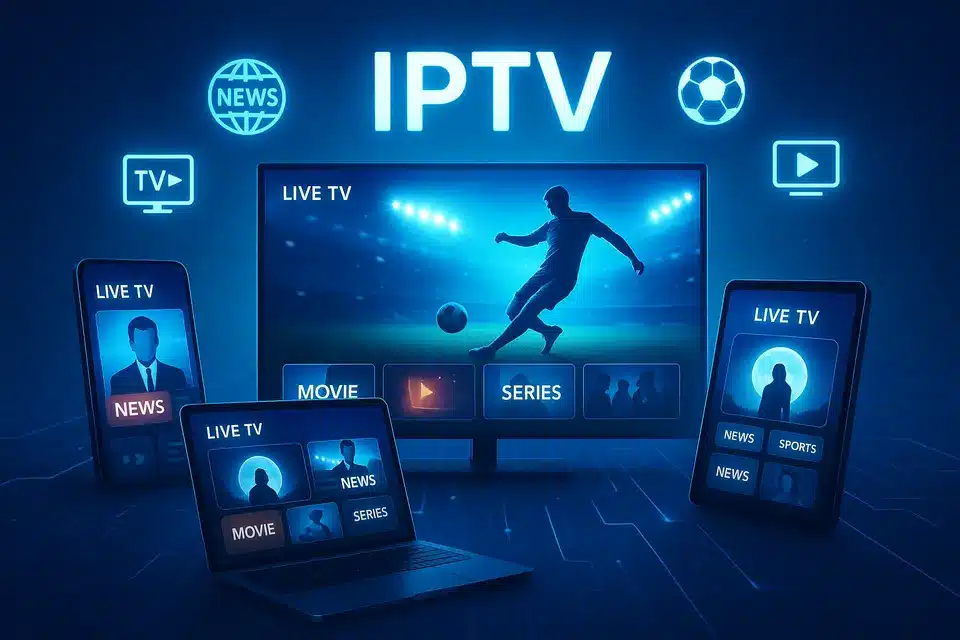
IPTV offers three main types of content: Live TV, Video-on-demand (VoD), and Time-shifted programming, providing flexibility and convenience for viewers.
How IPTV Works: The Technical Foundation
Understanding the workings of IPTV is crucial for making informed decisions about services and troubleshooting common issues. Here are the four primary stages involved:
Content Acquisition and Processing
Content acquisition begins at the headend, where IPTV providers aggregate live feeds and on-demand content. These sources might originate from satellite or fiber connections, processed into digital formats suitable for the web.
Encoding and transcoding utilize compression codecs like H.264 to maintain quality while reducing file sizes and enabling adaptive bitrate streaming based on the user’s internet speed.
Distribution Methods
IPTV employs two types of delivery systems:
- Multicast delivery: Sends one stream to multiple viewers, reducing bandwidth by utilizing a single multicast IP address.
- Unicast delivery: Provides individual streams for VoD content, allowing features like pausing and starting content at different times.
Core Infrastructure Components
Several components are essential for delivering IPTV services:
- Headend: The control center for ingesting, encoding, and encrypting content.
- Content Delivery Networks (CDNs): Global servers that cache and deliver content close to viewers, minimizing latency.
- Middleware systems: Manage user experiences, channel lineups, and interactive features like EPGs.
- Client applications: Allow users to stream and interact with IPTV services on their devices.
Understanding IPTV Subscription Models
An IPTV subscription is a payment model that gives you access to selected live channels and on-demand content. It differs from purchasing individual shows or movies;
What Your IPTV Subscription Includes
Typical features of a legitimate IPTV subscription comprise:
- Login credentials: Username and password for secure access.
- M3U playlist URLs: Files that include streams of channels.
- Channel lineup: Access to a variety of content categories.
- VoD libraries: A collection of on-demand movies and series.
- Catch-up TV: The ability to view recent broadcasts within a set timeframe.
- EPG data: Program schedules and relevant details.
- Multi-device support: Access via various devices like phones and smart TVs.
Pricing and Payment Structures
Prices for IPTV subscriptions can vary, generally ranging from $10 to $20 monthly for consumer services, while basic cable packages can cost $80-$150. Consider looking for transparent pricing and clear terms on trial periods before committing.
The Reality of Premium IPTV Services
Premium IPTV services promise enhanced quality and features over basic options, often including larger channel lineups and better user experiences.
What Premium Really Means
Expect the following in premium services:
- Wider catalogs, including niche and sports channels.
- Better reliability and “buffer-free” streaming.
- Support for multiple devices through dedicated applications.
- Features like cloud DVR and improved EPGs.
- Priority tech support for quick resolutions.
Legal and Safety Concerns
Not all premium IPTV services operate legally. It is vital to choose providers with proper licensing or risk issues such as:
- Legal ramifications for copyright infringement.
- Service interruptions due to non-compliance.
- Potential risks from unverified apps that may include malware or privacy violations.
IPTV Benefits: Why People Make the Switch
IPTV is gaining traction among viewers for its numerous advantages:
Device Flexibility and Accessibility
Stream on any internet-connected device including smart TVs, tablets, and smartphones. Start viewing a show in your living room, and pick it up later when you’re on the go!
On-Demand and Time-Shifted Features
Access movie libraries instantly and utilize catch-up TV to view shows that you missed. Start-over functionality allows you to begin viewing live shows from the beginning even if you’re late to tune in.
Cost Considerations
IPTV subscriptions are often significantly less expensive than traditional cable offerings, leading to considerable annual savings for many households.
Enhanced Feature Sets
Modern IPTV services commonly provide superior features such as comprehensive electronic program guides and cloud-based DVRs that enhance the viewing experience.
IPTV Drawbacks and Potential Risks
While IPTV services offer many benefits, several challenges must be considered:
Quality and Reliability Issues
Quality can differ greatly among providers, especially among unlicensed services that may lead to buffering and inconsistent performance during viewing.
Legal and Regulatory Concerns
Many IPTV subscriptions exist in legal gray areas. Always verify that the provider holds proper licensing to mitigate any potential legal consequences.
Technical Dependencies
Stable, high-speed internet is critical for viewing, especially with HD or 4K content. ISP throttling or network congestion can negatively impact service quality.
Security and Privacy Risks
Unofficial apps may include malware, and dubious services might engage in fraud or identity theft.
IPTV Device Compatibility and Setup Process
IPTV is widely compatible with multiple devices, ensuring you can access the service on your preferred platform.
Supported Device Categories
- Smart TVs: Many brands come with built-in apps for IPTV viewing.
- Streaming Devices: Devices like Roku and Amazon Fire TV facilitate seamless IPTV access.
- Mobile Devices: Access content on iOS and Android devices through dedicated applications.
- Computers: Use web browsers or media center software to stream IPTV content.
- Dedicated Set-top Boxes: These are optimized for IPTV streaming and offer specialized features.
Basic Setup Process
- Research and select a legitimate IPTV provider.
- Create an account and purchase your subscription.
- Download the official app or IPTV player software.
- Log in or load the provided M3U playlist and EPG URLs.
- Adjust streaming quality based on your internet speed.
- Test channel access and performance on your network.
How to Choose the Best IPTV Service for Your Needs
Finding the best IPTV service means evaluating many factors beyond flashy marketing. Here’s how to identify providers that offer real value:
Essential Evaluation Criteria
- Legality: Ensure the provider is clear about licensing agreements.
- Channel Lineup: Check if they offer the channels you want.
- Reliability: Look for providers with uptime guarantees.
- Device Support: Prioritize services with good app availability for your devices.
- Customer Support: Investigate their support accessibility.
- Pricing: Understand the full cost of subscription services.
Comparison Framework
Create a scoring system to rate each provider based on the criteria above, and research user reviews to bolster your decision-making.
Evaluating Premium IPTV Providers Safely
Inspect premium IPTV services closely, as high price does not guarantee authenticity. Here are ways to recognize legitimate providers:
Legitimacy Verification Checklist
- Transparent channel offerings and official partnerships.
- Available app distribution in legitimate stores.
- Clear contact details and customer service options.
Service Guarantees and Policies
- Ample refund policies and clear uptime targets.
- Detailed documentation available regarding features.
Warning Signs to Avoid
- Vague company information or hidden details.
- Unrealistic promises of “lifetime” services.
- Payment methods limited to untraceable options.
- Aggressive marketing tactics promoting urgency.
Quick Setup Guide for New IPTV Users
To set up IPTV service without hassles, follow this systematic approach:
Pre-Setup Planning
- Identify content priorities: Determine essential channels and content types to focus your search.
- Assess internet capacity: Ensure your connection meets the required speeds for your desired viewing quality.
- Select your viewing device: Identify the primary device(s) you intend to use.
Service Selection and Setup Steps
- Research legal options, focusing on licensed providers.
- Compare shortlisted services based on your criteria.
- Utilize trial periods to test quality before long-term commitments.
- Download official apps from legitimate sources.
- Adjust any necessary settings according to your preferences.
- Test thoroughly for stability and performance.
Optimization Tips
For improved performance, consider connecting devices via Ethernet and regularly updating your IPTV apps to benefit from the latest patches and enhancements.
Frequently Asked Questions
What is IPTV exactly?
IPTV is television delivered over IP networks (the internet) instead of cable or satellite, supporting live TV, video-on-demand, and time-shifted viewing features through internet-connected devices.
Do I need fast internet for IPTV?
Yes, stable broadband is essential. HD streams require consistent 5-10 Mbps per concurrent stream, while 4K content needs 25+ Mbps. Poor connections cause buffering and quality issues that make viewing frustrating.
Is IPTV legal to use?
IPTV technology is completely legal, but specific IPTV subscriptions may operate illegally if providers lack proper content distribution licenses. Legality depends on the provider’s licensing status and your local regulations. For a deeper legal overview, read: Is IPTV Legal? A Complete Guide to Safe and Legal IPTV Usage.
What does an IPTV subscription include?
An IPTV subscription provides recurring access to live channels and on-demand content over IP networks, typically including login credentials, channel lineups, VoD libraries, EPG data, and multi-device app access.
How do I avoid unsafe IPTV providers?
Choose services with clear licensing information, transparent company details, official app distribution, and standard payment methods. Avoid providers offering “lifetime” access, requiring cryptocurrency payments, or making unrealistic content promises. See our guide on spotting scams and safety: Spotting IPTV Scams: Risks and Safety Guide.
What makes IPTV “premium”?
Premium IPTV typically means more channels, better reliability, enhanced features, and superior support, but the label doesn’t guarantee legality. Always verify licensing and reputation regardless of premium marketing claims.
Can I watch IPTV on multiple devices simultaneously?
Many providers support multi-device usage, but concurrent stream limits vary by subscription tier. Check your service agreement for specific restrictions on simultaneous viewing across different devices. For advice on multi-device plans and how to manage connections, see: IPTV Multiple Devices Guide.